
Orbita Networking: Event networking app
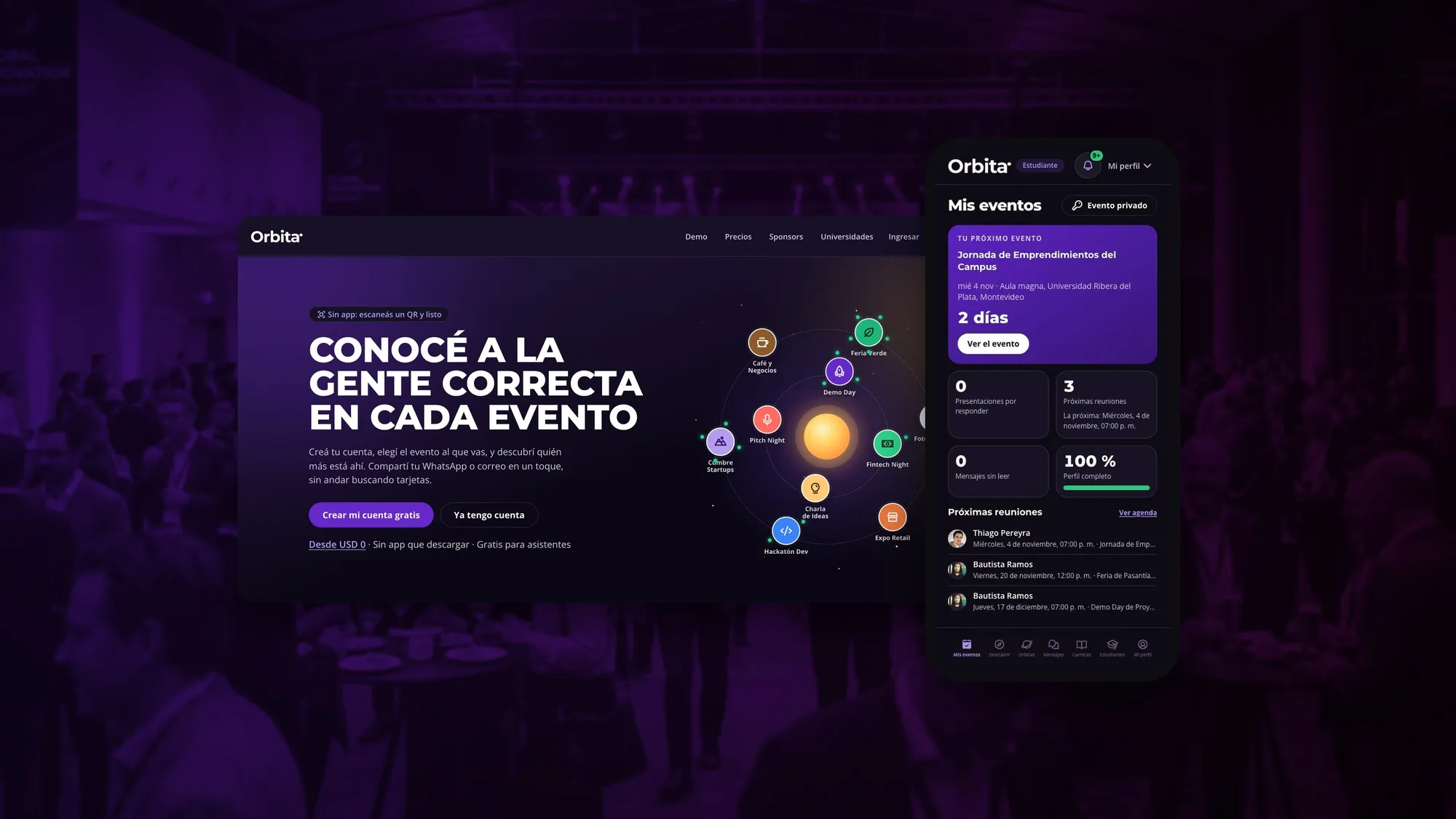
Event networking without downloading an app. Attendees scan a QR code, see who is there and connect. Built with AI and live at orbitanetworking.com
- Client
- Orbita Networking
- Year
- 2026
- Industry
- Events
- Service
- Web platform
84% of attendees surveyed said they would use it
Research first
The business case before the code
Before building anything, I benchmarked existing networking tools, built a business model canvas and surveyed 77 potential users. 84% said they would use the product, and 35% left their email to join a pilot.
The survey also corrected our starting assumption. We expected the main pain to be wasting time with the wrong people. The strongest signal was actually the social moment itself: 65% struggled to approach conversations or groups that had already formed. So Orbita had to do more than suggest who to meet. It had to make the meeting actually happen, with mutual matches and contact sharing in one tap.
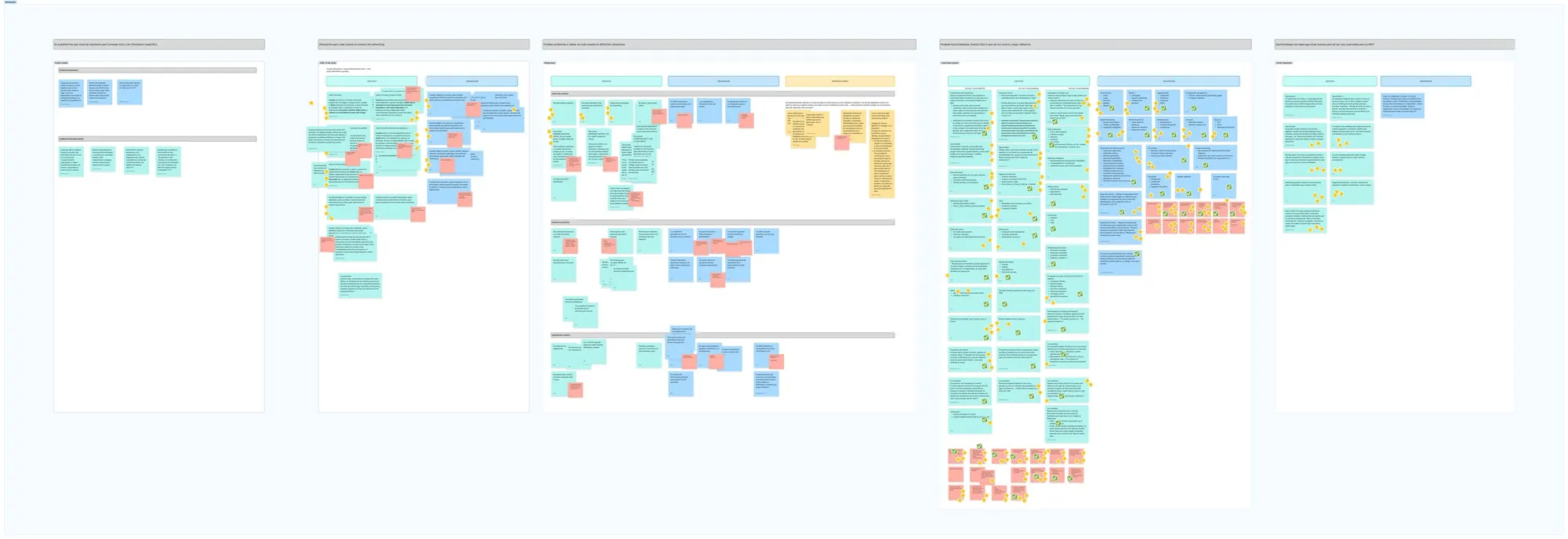
With the research done, the next step was to plan the product before writing any code. In FigJam I mapped where attendees and organizers look for information today, what each role needs, the problems that show up before, during and after an event, and every functionality we could imagine.
MVP scope
Prioritizing with MoSCoW
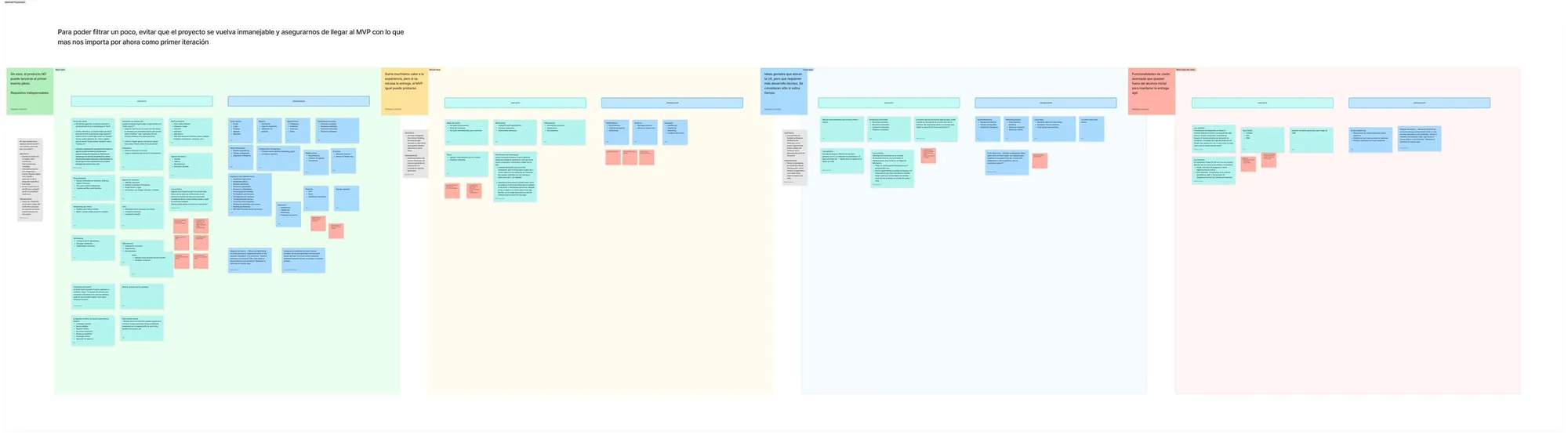
Then came the hard part: cutting. Every idea went through a MoSCoW prioritization to keep the project manageable and reach the pilot with what mattered most: must-haves that the first event cannot run without, should-haves that add value but can wait, nice ideas that need more development, and advanced features left out of the first release on purpose.
The product
Meet the right people at every event
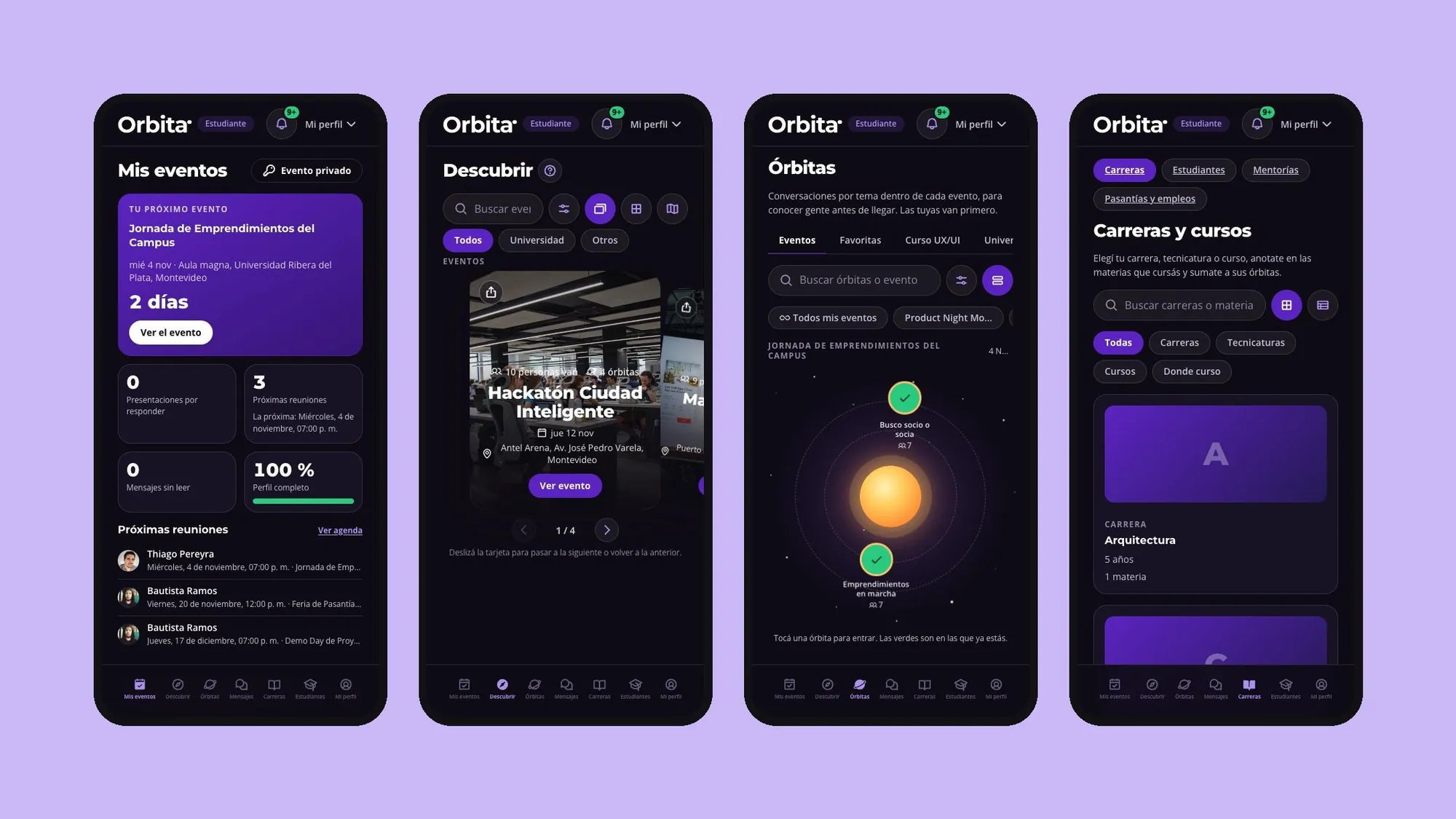
At most events, people leave with a pocket full of business cards and no idea who they should have met. Orbita fixes that with a QR code: attendees create a profile, join the event and see who else is there. They share WhatsApp or email in one tap, with no app to download.
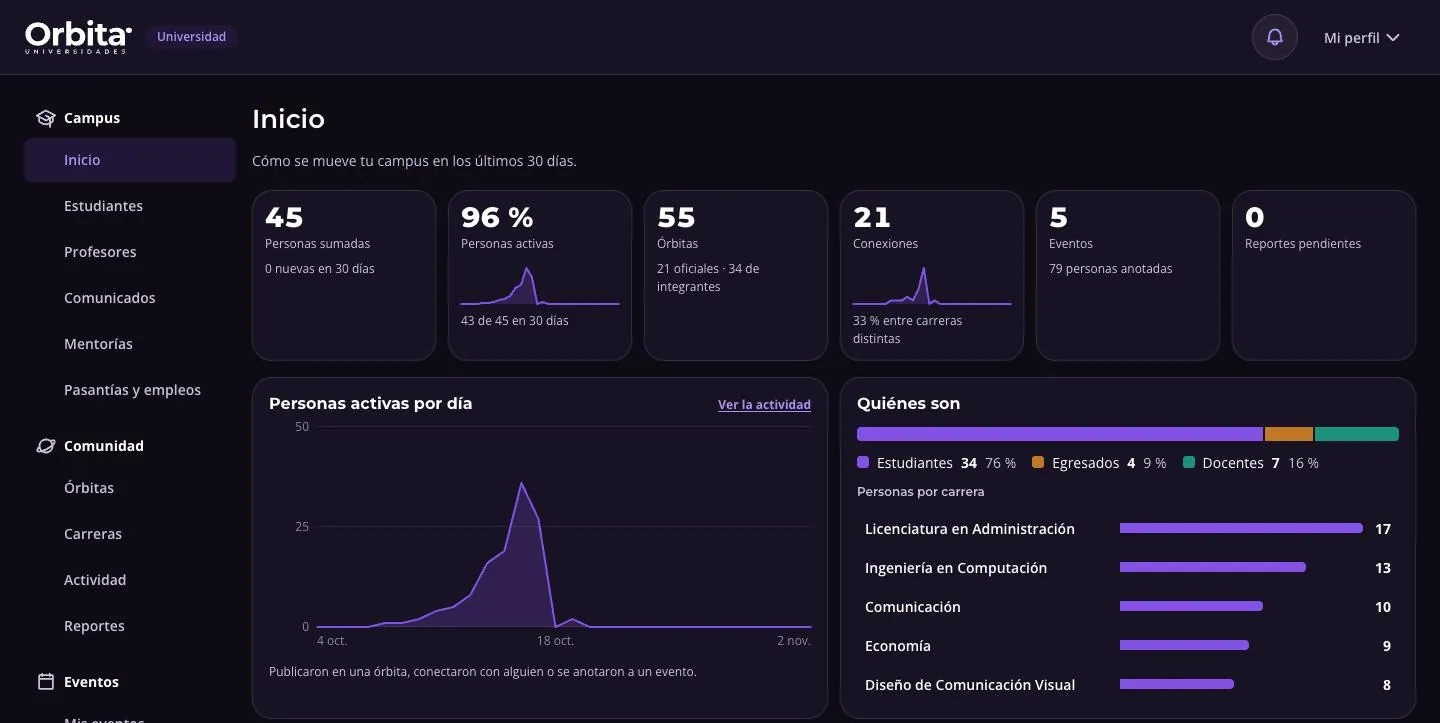
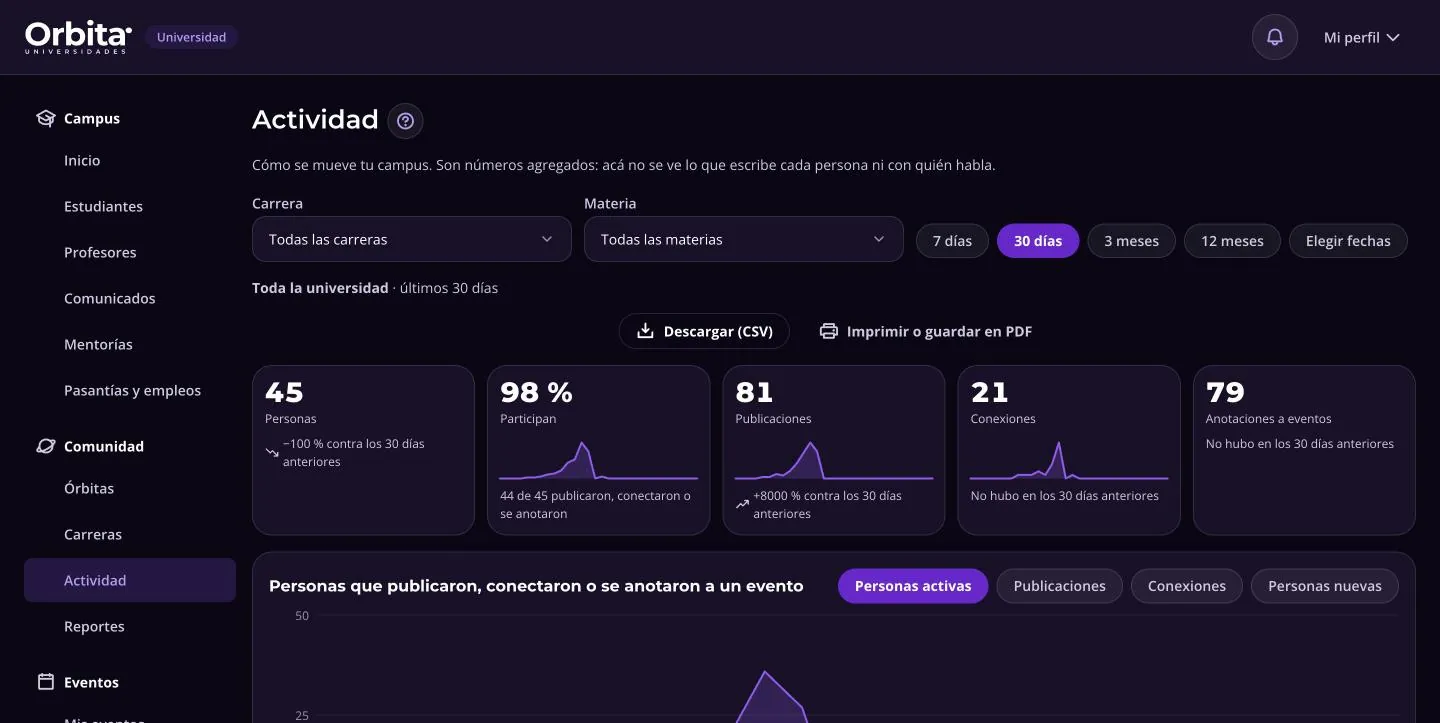
Organizers get a live picture of the connections their event creates, and sponsors get evidence they can take back to their companies. Universities get their own space: students join their degree and courses, find classmates, mentors and internships, and meet in topic "orbits" across the campus. It is live at orbitanetworking.com.
Business decisions
Who pays, who doesn’t, and why
Networking only works if the room joins, so the first decision was about who pays. Attendees use Orbita for free; organizers pay a public, per-event price. The paying segment is clear: organizers of mid-size professional events (100 to 600 people) such as conferences, trade fairs and business associations.
- No app and no new ticketing
Attendees join from the browser with a QR code, and organizers keep the ticketing platform they already use. That removes two common reasons for attendees and organizers to say no. - Sponsors as the selling argument
Each event produces a report per sponsor (reach, interest, contacts and meetings), so organizers can justify and renew sponsorships. - Universities as a second segment
Campus communities, job fairs and entrepreneurship activities connect students with companies, and each student brings Orbita to the next event. - Pilots before scale
The first events run as pilots with partner organizers and a first university, with personal support on the day and a results interview afterwards.
Results
- No app to download
Attendees join by scanning a QR code, which removes the biggest drop-off point at events. - Value for every side
Free for attendees, measurable results for organizers, and evidence for sponsors. - Ready for campuses
Universities can run recurring networking orbits for students and alumni. - Built and maintained with AI
A full product designed, built and tested by one product designer directing AI.
Read more about the approach: AI Can Build Your Product. It Can’t Understand Your Process.