AI tools can turn a prompt into a working app in an afternoon. Screens, logins, a database, even payments. For founders, that feels like the end of a bottleneck: why pay for product expertise when you can describe what you want and watch it appear?
Because AI builds exactly what you describe. And what you describe is almost never how your business actually works.
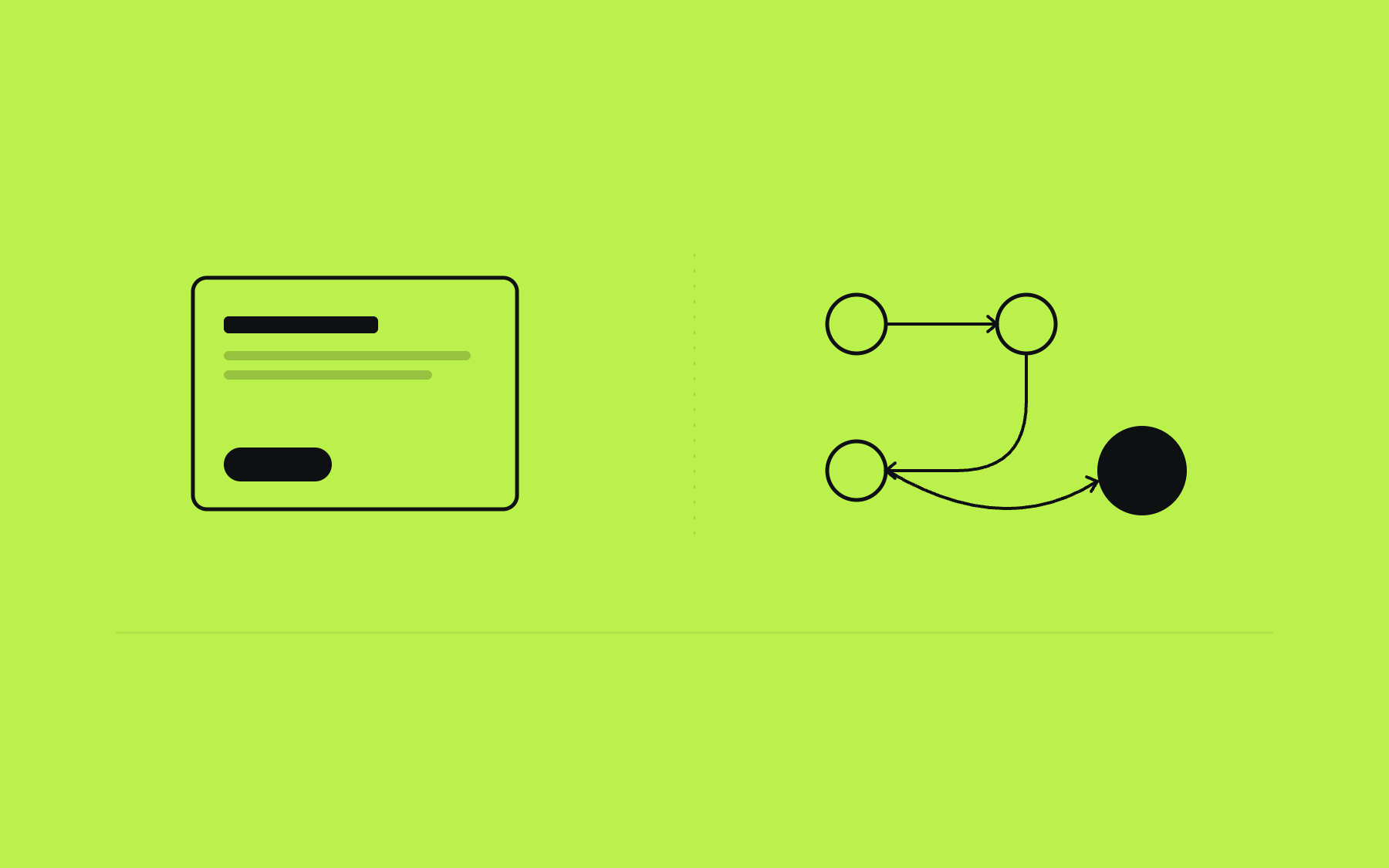
AI builds screens, not processes
Every real product sits on top of a process: who does what, in which order, with what information, and what happens when something goes wrong. A logistics tool is not a dashboard; it’s a chain of handoffs between warehouse staff, drivers and customers. A healthcare app is not a booking form; it’s consent, compliance, a clinician’s cognitive load and a patient who is anxious.
AI is excellent at producing the visible layer. It has no idea about the invisible one. It won’t ask who approves a refund, what happens when two people edit the same record, or why your operations team keeps a spreadsheet on the side. It fills those gaps with confident guesses, and the guesses look finished.
Where AI-built products quietly break
Without someone who understands processes, the same problems show up again and again:
- The happy path only. The demo works perfectly until a real user cancels halfway, uploads the wrong file or comes back three days later. Edge cases are where processes live, and AI skips them unless you know to ask.
- One user, when there are five. Most products serve several roles: the buyer, the admin, the approver, the support agent. AI tends to design for one generic “user”, so permissions, notifications and views fall apart as soon as the second role logs in.
- Automating the mess. If the current workflow is broken, AI will happily digitize it, faster. You end up with a polished version of the problem.
- Data that doesn’t connect. Screens that look right but don’t share the same source of truth, so reports disagree and your team goes back to spreadsheets.
- Rework disguised as speed. You save weeks on the first build, then spend months patching flows that were never mapped. The cost didn’t disappear; it moved to later, when it’s more expensive.
What a process-minded professional brings
A product designer who understands processes starts before the screens. I map how the work actually happens today: the people involved, the decisions they make, the information they need and the moments where things go wrong. Then I decide what the product should simplify, what it should automate and what it should leave alone.
That map becomes the brief for AI. Instead of a vague prompt, your AI tools get clear flows, defined roles, real edge cases and a design system to follow. The result is something AI can build quickly and your users can actually rely on.
In practice, that means:
- Map the real workflow with the people who do it, not the version in the pitch deck.
- Find the friction that costs time, money or trust, and decide what to fix first.
- Design the flows and states for every role, including errors, empty states and exceptions.
- Validate with real users through a clickable prototype before anyone builds.
- Hand AI a precise blueprint, so the build is fast and right the first time.
AI is the engine. Process is the steering.
Using AI to build your product is a smart move. Using it without someone who understands how your business runs is like buying a faster car without knowing the route. You’ll get somewhere quickly, just not where you meant to go.
The founders who win with AI aren’t the ones who build fastest. They’re the ones who know exactly what to build, for whom and why, and then let AI do the heavy lifting. That’s agency-level rigor without the agency overhead, and it’s the part AI can’t do for you.
If you’ve already built something with AI, read how to validate an AI-coded MVP before it quietly fails. Curious about budget? See what it really costs to build an MVP in 2026, or how I take products from idea to launch.
Building a product with AI and want it to fit how your business really works? Let’s talk.