MVP development for startups is where most founders lose months and budget: they build before they validate. I take you from idea to a revenue-ready MVP with the speed of a solo operator and the rigor of an agency, one designer accountable end to end.
Wondering about budget first? Read what it really costs to build an MVP in 2026.
1. Product strategy
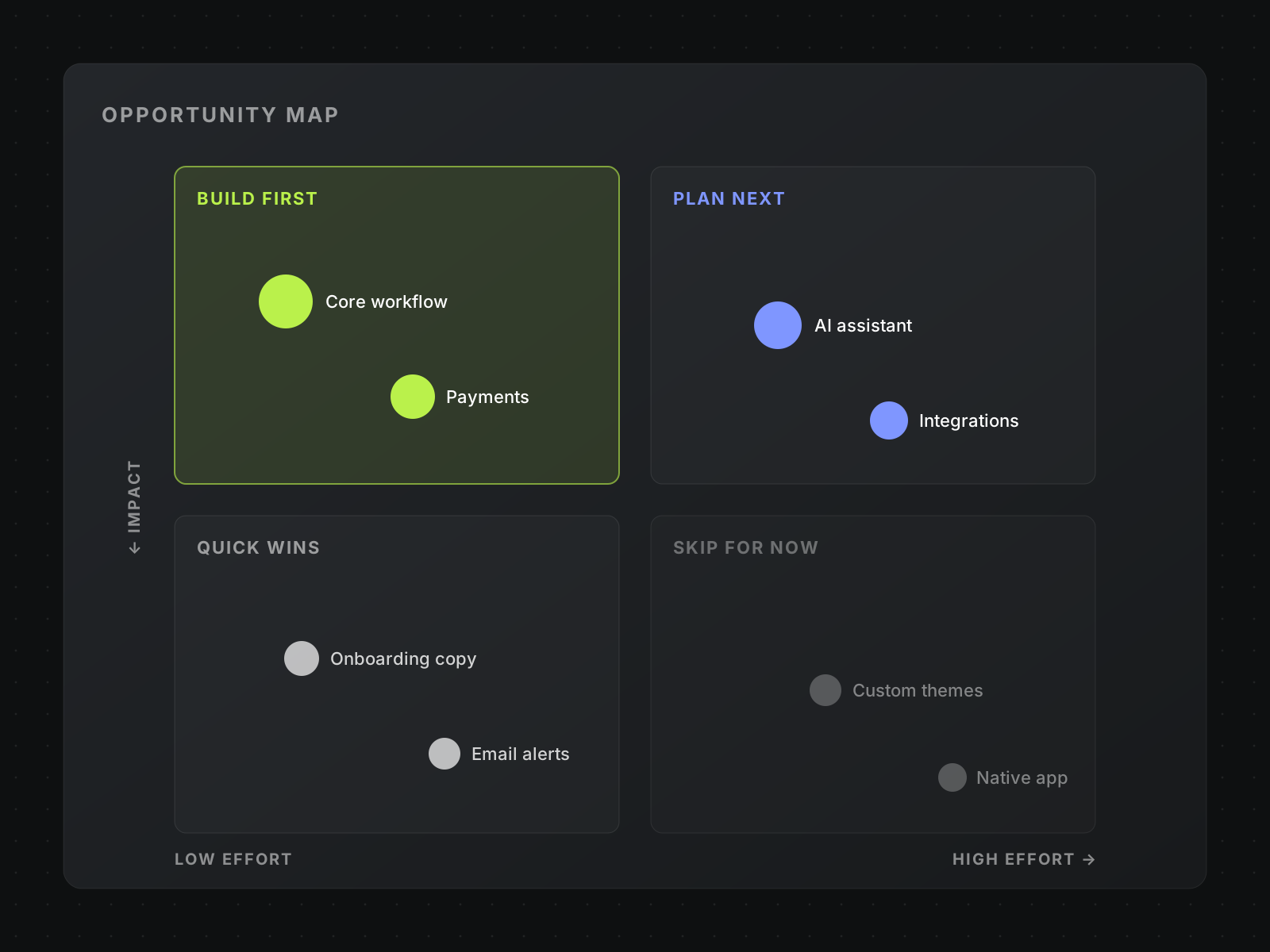
MVP definition
I identify the core problem and prioritize the features that provide immediate value to your users. With a simple, testable prototype, I gather actionable feedback from real users and lay the groundwork for scalable development.
Strategic expertise
I bring cross-industry experience and strategic guidance to align design decisions with business objectives, bridging the gap between design and strategy.
Existing products
I refine and elevate existing apps by optimizing usability, improving AI behaviors, and keeping them competitive and scalable over time.
Digital transformation
I improve user experience and financial efficiency by optimizing workflows through intuitive design and automation. The upfront investment is real, but a user-centric approach lowers costs and keeps the product scalable and profitable.
2. UI/UX design and AI product optimization
Good design is good business: strategic UX/UI turns raw AI complexity into products users adopt, convert on and keep coming back to.
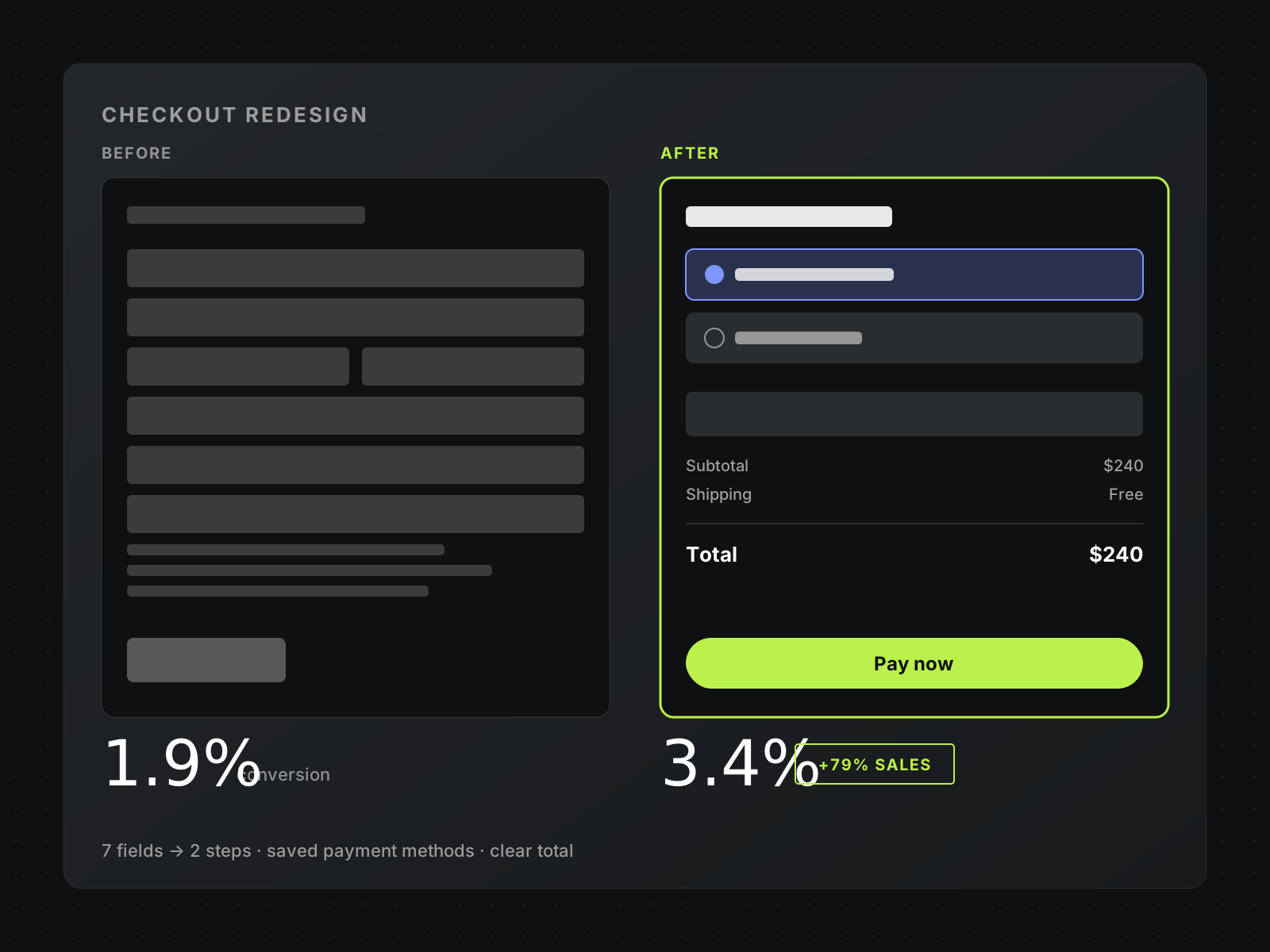
- Accelerated revenue: streamlined onboarding and expansion loops reduce time-to-value, boosting conversion and lifetime value (LTV).
- Minimized market risk: early validation through research, wireframes and interactive prototypes stress-tests features before they reach the market.
- Reduced dev waste: refining workflows in Figma first eliminates costly engineering rework, so development time goes where it matters.
- AI product optimization: I make AI features understandable and trustworthy, with clear outputs, visible sources and user control, so people actually adopt them and keep using them.
3. Product-led growth
After launch, turn data into decisions: find what really drives growth and double down on it.
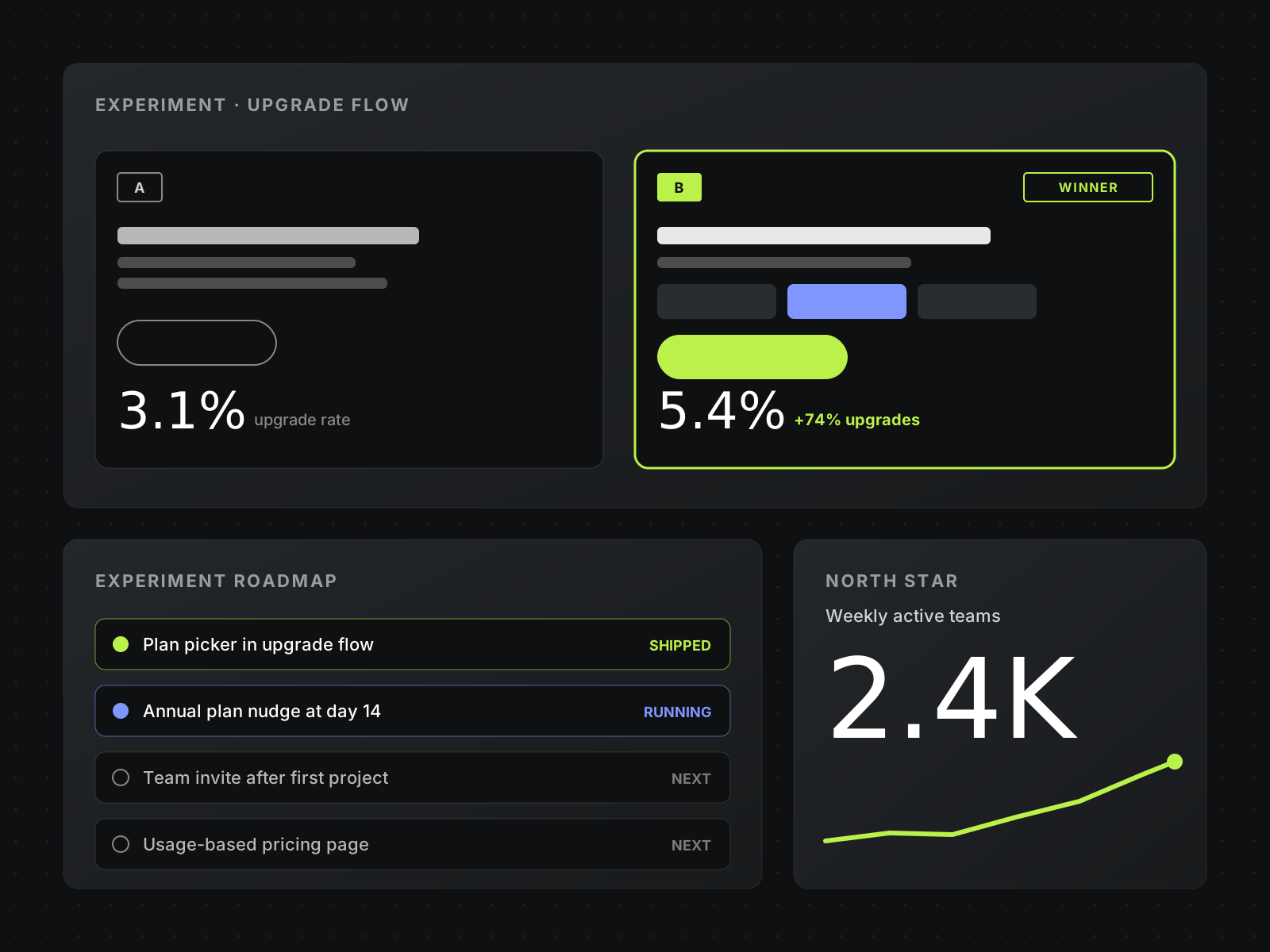
- Growth analytics: I set up the metrics that matter, activation, retention and the one action that signals value, so every design decision is backed by data, not opinions.
- Experiment roadmap: a prioritized backlog of hypotheses and fast experiments, from A/B tests and flow or copy changes to prototypes, to learn what actually moves your numbers.
- Monetization and expansion: upgrade flows, pricing pages and upsell moments designed to grow revenue per user without hurting the experience.
- Retention loops: lifecycle moments, re-engagement emails and in-product nudges that bring users back and turn your product into a weekly habit.
Agency or working with me?
You get the rigor of a small studio from one senior designer, with no agency markup. See how it compares in the small agency alternative, and check services and pricing.
Ready to turn your idea into an MVP? Let's talk.