


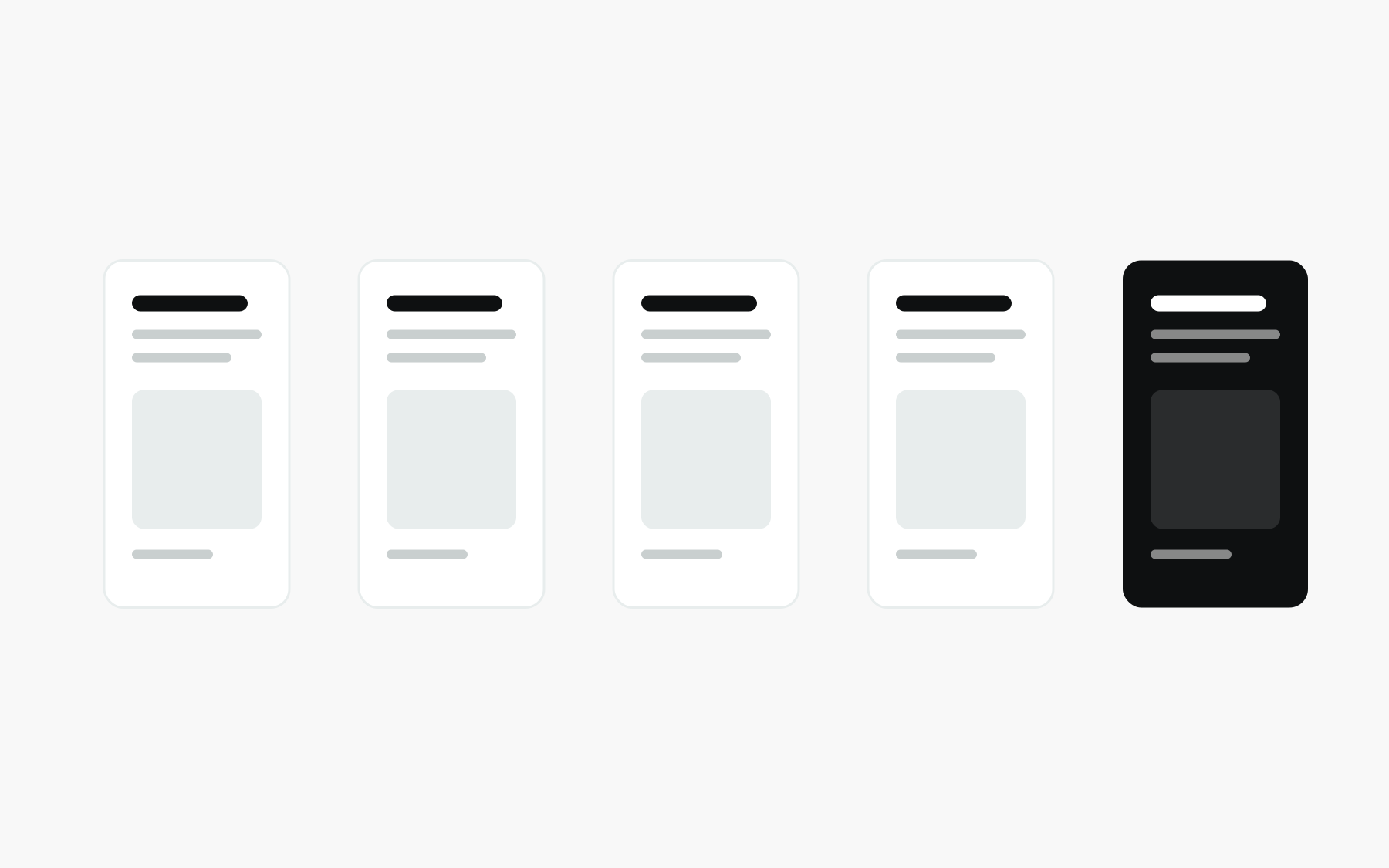
Open ten new SaaS products this week and something strange happens: they blur together. The same rounded cards. The same soft shadows. The same left sidebar, the same pill buttons, the same empty dashboard greeting you by first name. Different companies, different problems, identical skin.
We've reached an era of product sameness. And it isn't just how products look; it's how they behave. Same onboarding, same three-step wizard, same command palette, same AI assistant bolted into the corner. Sameness has quietly become the default, and for founders trying to stand out, that's a real problem.
Why everything converged
A few forces pushed us here at once:
- Component libraries as defaults. Tailwind, shadcn, Material and a handful of UI kits are brilliant accelerants, but when everyone starts from the same components with the same tokens, everyone ends up in the same place.
- AI that copies the average. AI design and code tools are trained on what already exists. Ask them for an interface and they return the statistical middle of the internet: competent, familiar, and utterly generic.
- Best-practice cargo-culting. Teams copy whoever is winning. “Linear does it this way” becomes a spec, and a thousand products inherit a look that was never theirs.
- Risk aversion. Familiar feels safe. Nobody gets fired for shipping the same dashboard everyone else has.
Why sameness is a business problem, not a taste problem
This isn't about aesthetics. When your product looks and works like everyone else's, you compete on price and feature checklists, the two worst places to compete. You become interchangeable. Users can't remember you, can't describe you to a friend, and feel no loyalty when a cheaper clone appears.
Differentiation used to live partly in the technology. Now that anyone can spin up the same stack in a weekend, the product experience is one of the last defensible moats you have.
How to escape the sea of sameness
Standing out doesn't mean decorating differently. It means making different decisions where they count:
- Design the core flow, not the theme. Anyone can reskin. Almost no one rethinks the actual sequence of steps a user takes to get value, and that's where memorability is built.
- Be opinionated. Generic products try to do everything for everyone. Distinctive products make a clear bet about who they're for and what they refuse to do.
- Find your one signature moment. A single interaction or piece of copy that feels unmistakably yours does more for recall than a whole redesign.
- Use AI as a starting point, not the finish line. Let it generate the boring 80%, then spend your human effort on the 20% that makes you different.
The bottom line
Sameness is the natural gravity of a world where everyone shares the same tools, templates, and training data. Escaping it is a deliberate act, and it's exactly the kind of decision that separates a product people tolerate from one they remember.
If your product is starting to look like everyone else's and you want to carve out something distinct, let's talk.