We have officially entered the era of the autonomous founder.
Thanks to the rise of "vibe coding"- the practice of using natural language to command AI development agents like Cursor, Bolt, or specialized LLM code pipelines - the technical barrier to entry for building software has completely collapsed. Today, an entrepreneur with zero engineering background can manifest a functional software prototype in a single afternoon simply by describing it.
It feels like magic. But for many startup founders, this magic quickly gives way to a painful operational reality.
As the codebase expands at machine speed, the user interface begins to degrade. Buttons shift position between screens. Spacing becomes erratic. Overlapping text blocks render dashboards unreadable. What started as an incredibly fast sprint toward an MVP mutates into an unmaintainable mountain of UI technical debt.
This is the vibe coding paradox: AI allows you to build code faster than ever before, but it also allows you to accumulate visual and structural chaos faster than ever before.
If you want your startup to survive the leap from a cool demo to a scalable, venture-backed product, you need to understand how to govern AI development with strategic product design.
1. Why Vibe Coding Inherently Breeds "UI Slop"
To leverage AI-driven development successfully, founders must understand how these models think. AI code agents operate on context windows and local prompts. When you ask an AI to build a new feature or add a dashboard panel, it focuses entirely on making that specific element functional right now.
What it cannot do natively is maintain a holistic, birds-eye view of your brand’s visual ecosystem.
Without explicit constraints, the AI will arbitrarily invent new hex codes, introduce rogue padding variables, and generate disjointed CSS styles. The result is "UI slop", a fractured, amateur-looking interface that instantly kills your product’s credibility when pitching to early adopters or investors.
2. The Solution: Weaponizing Design Systems inside AI Prompts
The secret to successful vibe coding isn't writing better prose prompts; it’s providing the AI with an absolute, unyielding source of truth.
Before you let an AI agent generate a single line of front-end code, you must feed it a highly structured, tokenized design system.
How it Works in Practice:
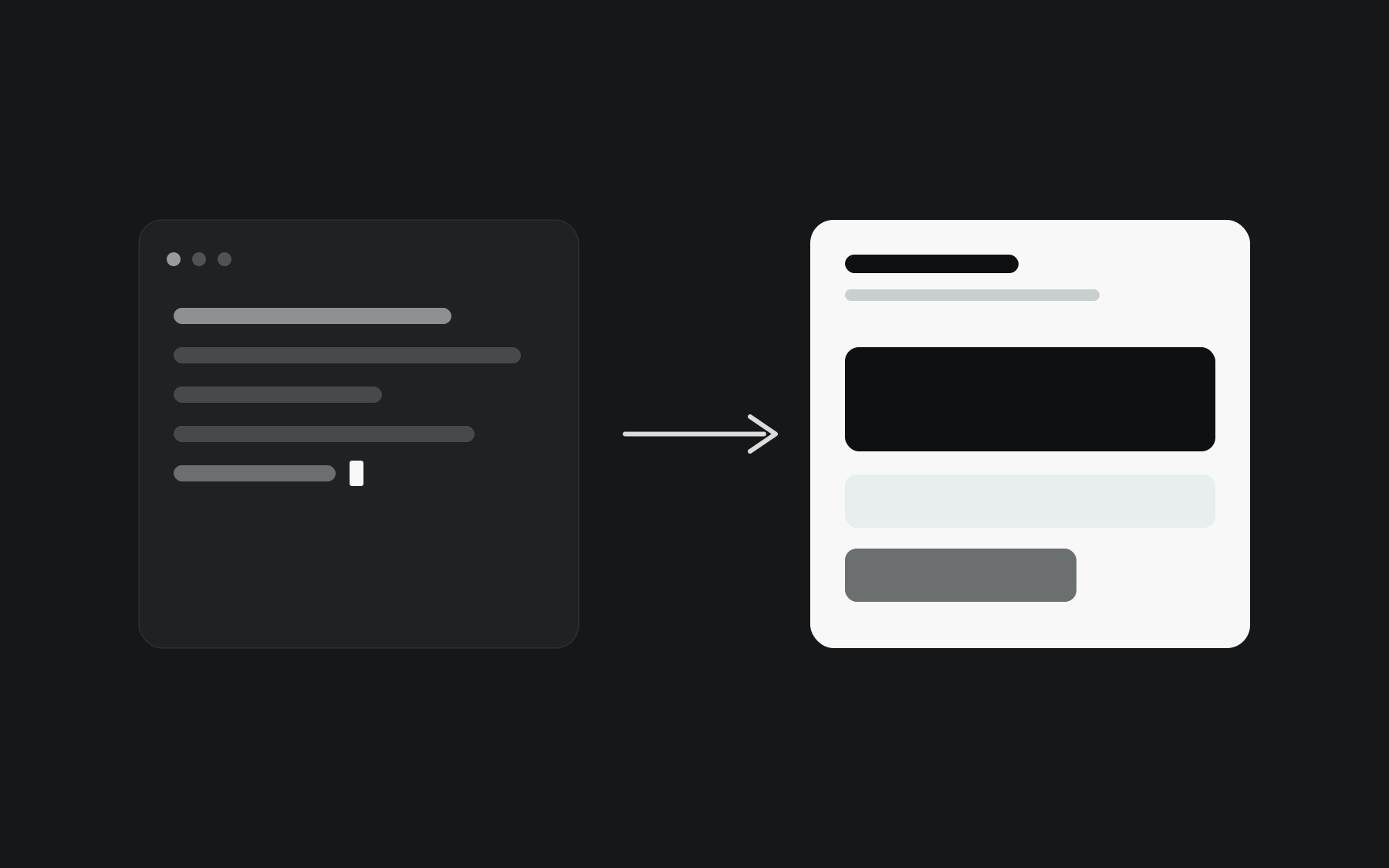
By working with a senior product designer to establish a machine-readable UI library (defining strict tokens for spacing, typography, colors, and layout components), you change the rules of the game. Instead of telling the AI, "Build me a checkout button," your prompt ecosystem forces the AI to look at your pre-approved design tokens.
The AI ceases to invent random code; it simply assembles pre-validated components. This allows you to maintain the hyper-velocity of vibe coding while ensuring your product remains visually cohesive, professional, and enterprise-ready.
3. Protecting Your Engineering Runway via Concept Validation
Because AI makes coding so accessible, many founders skip the critical discovery and design phase altogether. They instantly start building the final product.
However, writing code, even machine-generated code, is still the most expensive way to run a product experiment. If you vibe-code an entire platform based on unverified assumptions, you will eventually have to spend weeks prompting the AI to undo, refactor, and rewrite the architecture when users find it confusing.
The Strategic Shift:
Operational maturity means utilizing low-cost wireframes and high-fidelity interactive prototypes before engaging your AI development tools. Visualizing the user journey in Figma allows you to run rapid user testing, align your stakeholder logic, and iron out friction points in hours rather than weeks.
Once the user experience is fully validated, you hand the blueprints to your AI engine. You preserve your runway by ensuring the AI builds the right thing the very first time.
Conclusion: The Founder’s New Competitive Advantage
Vibe coding is an incredible superpower, but speed without direction is a liability.
The founders who win in this hyper-accelerated market will not be the ones who prompt the fastest. They will be the ones who wrap their AI development engines in rigorous, human-centered product guardrails.
By combining the raw execution speed of AI with the strategic maturity of professional UX design, you eliminate engineering waste, protect your capital, and build a resilient product that is ready to scale.
Ready to supercharge your AI development stack?
Don’t let chaotic layout debt slow down your launch. Let’s architect a scalable design system that gives your AI development agents the guardrails they need to build beautiful, enterprise-grade software at machine speed.