


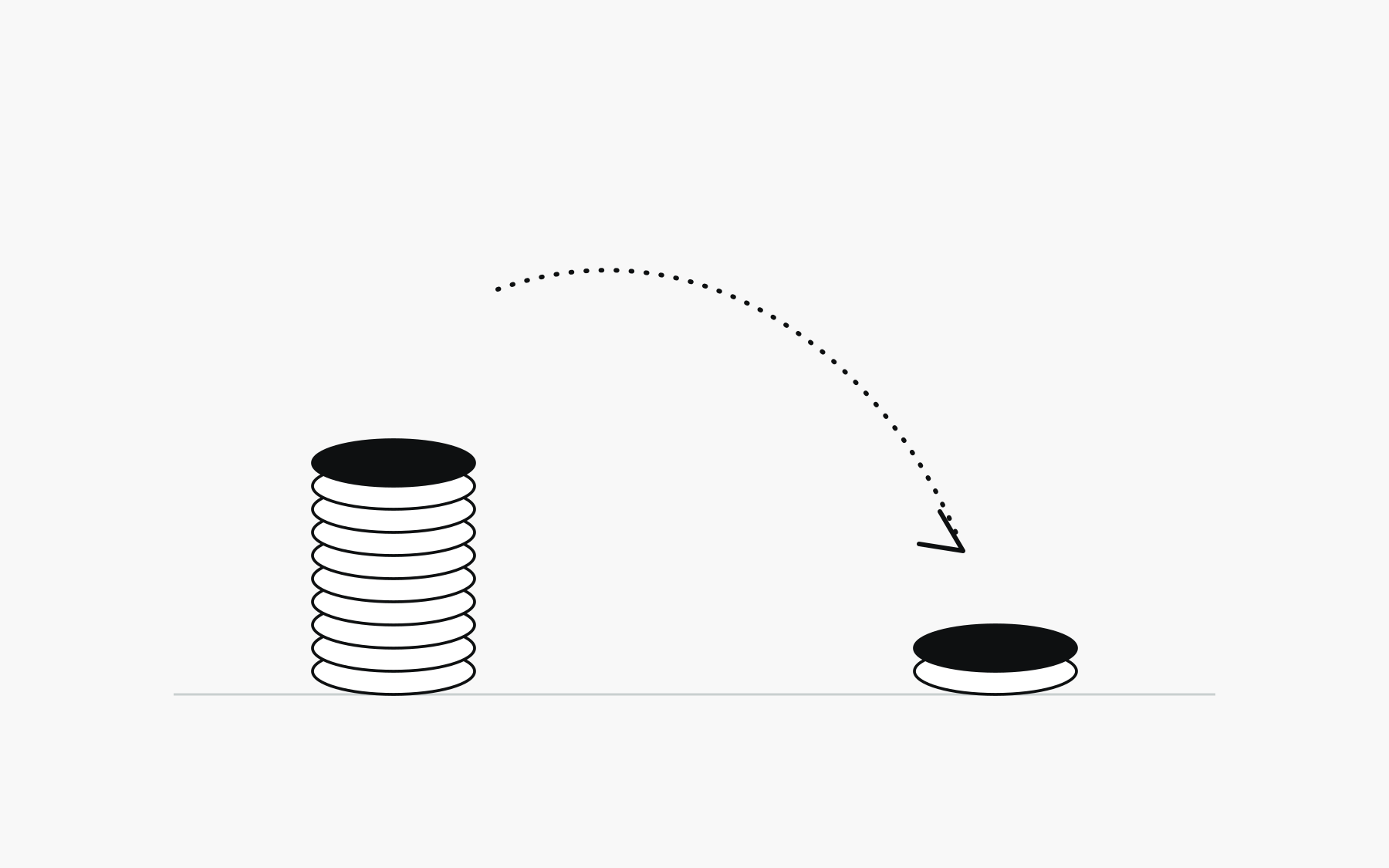
A year ago, “how much does an MVP cost?” had a sobering answer. Today it has a shocking one. The number has fallen off a cliff, and understanding why should change how founders spend every remaining dollar.
Then: tens of thousands, and months
Not long ago, turning an idea into a working MVP meant hiring. A freelance developer or a small agency, a designer, weeks of build time. Realistically you were looking at anywhere from $30,000 to well over $100,000, and two to six months, before a single real user touched the product. That price tag forced discipline, but it also killed a lot of good ideas before they could be tested.
Now: from around $5,000, and weeks
AI-assisted development changed the math. With modern AI coding tools, prototyping platforms, and off-the-shelf infrastructure, a functional MVP can now be built for a fraction of what it used to cost, realistically from around $5,000 as a sensible minimum, in weeks rather than months. The raw act of building software has been commoditized.
That $5k figure matters: it isn't the price of “an app,” it's the floor for doing it properly, real validation, thoughtful UX, and a build that won't collapse the moment you add users. You can technically vibe-code something for less. Whether it's worth anything is a different question.
The trap hidden inside cheap building
Here's the part founders miss. When building was expensive, the cost itself forced you to think before you built. Now that building is cheap, that natural checkpoint is gone, and it's easier than ever to spend your weeks efficiently building the wrong thing.
The cost didn't disappear. It moved. The expensive part of an MVP is no longer the code; it's knowing what to build.
Where the money should go now
- Validation before build. Interviews, a landing-page test, a clickable prototype, the cheapest insurance you can buy against building something nobody wants.
- UX and product decisions. Since anyone can build the same thing, the experience is your differentiation. This is where dollars compound.
- The last mile. Onboarding, empty states, and the unglamorous details that turn a working demo into a product people actually keep using.
The bottom line
The cost of building an MVP has collapsed from tens of thousands to a few thousand in about a year. That's genuinely great news for founders, but only if you redirect the savings. Building got cheap. Building the right thing is still where the money, and the win, lives.
Thinking about your MVP and where the budget should actually go? Let's talk.